
In today’s fast-paced world, it can be challenging to keep track of everything, especially when it comes to managing the needs of our beloved pets alongside our busy schedules. This is where pet journaling comes into play. By keeping a dedicated journal for your pet, you can efficiently track their needs, health, and habits while also managing your time better. This method not only helps in ensuring the well-being of your pet but also brings a sense of order and control into your daily life. In this comprehensive guide, we’ll explore the intricate details of pet journaling, offering insights and tips on how to make the most of this effective practice. Whether you’re a seasoned pet owner or a newbie, pet journaling can transform your relationship with your pet and streamline your daily routine.
Pet Journaling: Track Your Pet’s Needs and Your Time Efficiently
Pet journaling is more than just jotting down a few notes about your pet’s daily activities. It’s a structured way to log important information about your pet’s health, behavior, and preferences. By doing so, you can quickly identify any changes or patterns that may require attention. Additionally, by organizing your pet’s information in a journal, you can manage your time more efficiently and ensure that you’re meeting all of your pet’s needs without feeling overwhelmed.
One of the key benefits of pet journaling is the ability to track your pet’s health. Regular entries about their diet, exercise, and any symptoms of illness can help you spot potential health issues early. For instance, if you notice a consistent pattern of lethargy or changes in appetite, you can bring this information to your veterinarian’s attention for a more informed consultation.
Moreover, pet journaling can greatly enhance your time management. By scheduling regular activities such as feeding, walking, and vet appointments in your journal, you can plan your day more effectively. It helps you allocate specific times for pet care, ensuring that you’re not caught off guard by forgotten tasks or last-minute scrambles.
Pet journaling can also foster a deeper bond with your pet. By taking the time to observe and record their behavior and preferences, you become more attuned to their needs and moods. This awareness can lead to a more harmonious relationship, as you’re better equipped to respond to their needs promptly and appropriately.
In conclusion, pet journaling is a powerful tool for pet owners who wish to streamline their lives and enhance the care they provide to their furry friends. By tracking your pet’s needs and your time efficiently, you can ensure a healthy, happy life for both you and your pet.
The Essentials of Pet Journaling
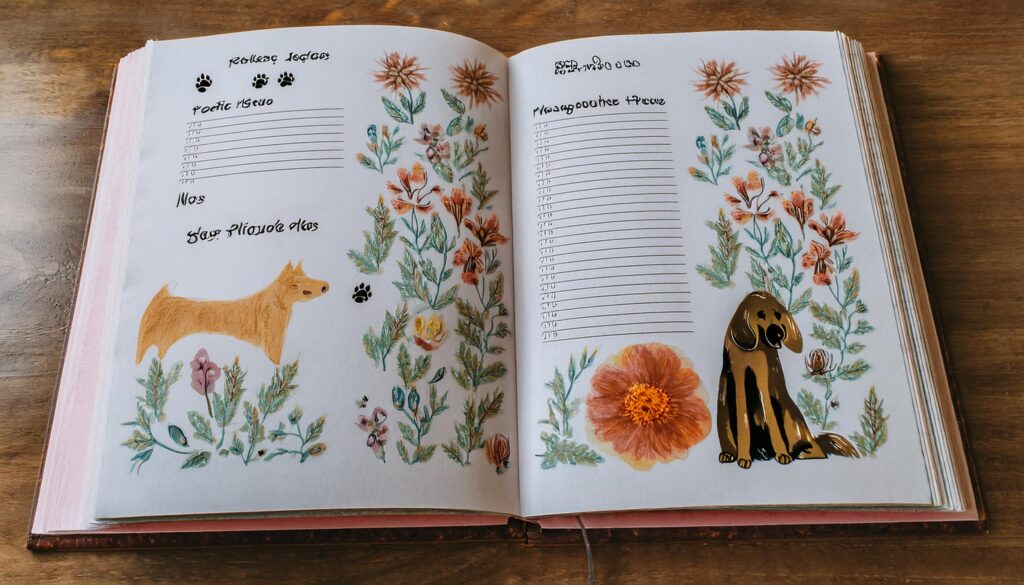
When starting a pet journal, it’s important to consider what information will be most beneficial to record. While the details may vary depending on your pet’s species, breed, and individual needs, there are several core elements to include in any pet journal.
Health and Medical Records
Keeping a detailed record of your pet’s health is perhaps the most critical aspect of pet journaling. This section should include information about vaccinations, medications, vet visits, and any medical conditions or treatments. By maintaining a comprehensive health history, you can provide your veterinarian with valuable insights, enabling them to make informed decisions about your pet’s care.
In addition to these records, it’s helpful to note any observations about your pet’s general health. Are they eating well? Is their coat shiny and healthy? Are there any signs of discomfort or illness? By documenting these details regularly, you can quickly identify any changes that may require attention.
Diet and Nutrition
Understanding your pet’s dietary needs is crucial for their overall well-being. In your journal, record information about your pet’s diet, including their regular meals, treats, and any dietary changes. Note any preferences or allergies, as well as how they respond to different foods. This information can be invaluable for identifying dietary issues or making adjustments to improve your pet’s nutrition.
Exercise and Activity Levels
Physical activity is essential for maintaining your pet’s health and happiness. Use your journal to track your pet’s exercise routine, including walks, playtime, and any other activities. Note the duration and intensity of these activities, as well as any changes in behavior or energy levels. This information can help you ensure that your pet is getting the right amount of exercise to stay healthy and happy.
Behavior and Training
Understanding your pet’s behavior is key to providing effective training and ensuring a harmonious household. In your journal, document any training sessions, behavioral changes, or issues that arise. Note your pet’s reactions to different commands or situations, and record any progress or setbacks. This record can serve as a valuable reference when addressing behavioral challenges or working with a professional trainer.
Grooming and Hygiene

Regular grooming is an important aspect of pet care, contributing to their health and comfort. Use your journal to keep track of grooming routines, such as baths, brushing, nail trimming, and ear cleaning. Note any issues, such as skin irritations or parasites, and record any products used. This information can help you maintain a consistent grooming schedule and address any hygiene-related concerns promptly.
Socialization and Interaction
Socialization is crucial for your pet’s emotional well-being and development. Record information about your pet’s interactions with other animals and people, noting any positive or negative experiences. This section can also include observations about your pet’s temperament and social preferences, helping you create a supportive environment for them to thrive.
How to Start Your Pet Journal
Starting a pet journal may seem overwhelming at first, but with a little planning and organization, it can quickly become a rewarding habit. Here are some steps to help you get started:
Choose the Right Journal
The first step in starting your pet journal is selecting the right format. There are various options available, including traditional paper journals, digital apps, and spreadsheets. Consider your personal preferences and how you plan to use the journal. Some pet owners prefer the tactile experience of writing in a paper journal, while others appreciate the convenience and accessibility of digital formats.
Set Clear Goals
Before you begin, take some time to consider what you hope to achieve with your pet journal. Are you primarily focused on tracking health information, or do you want to record a more comprehensive overview of your pet’s life? Setting clear goals will help you determine what information to include and how to structure your journal.
Create a Routine
Consistency is key to successful pet journaling. Establish a routine for updating your journal, whether it’s daily, weekly, or as needed. Set aside a specific time for journaling, and make it a regular part of your schedule. This routine will help you stay organized and ensure that you don’t overlook important details.
Be Observant
Effective pet journaling requires careful observation of your pet’s habits and behaviors. Take note of any changes or patterns you notice, and record them in your journal. Over time, you’ll develop a deeper understanding of your pet’s needs and preferences, allowing you to provide better care and support.
Stay Flexible
While it’s important to maintain a consistent routine, it’s also important to stay flexible and adapt as needed. Your pet’s needs may change over time, and your journaling approach should evolve accordingly. Be open to trying new methods or formats, and don’t hesitate to make adjustments if something isn’t working.
Benefits of Pet Journaling
Pet journaling offers a wide range of benefits for both pets and their owners. By tracking your pet’s needs and your time efficiently, you can enhance your pet’s quality of life and strengthen your bond with them.
Improved Health Monitoring
One of the primary benefits of pet journaling is improved health monitoring. By keeping detailed records of your pet’s health and behavior, you can quickly identify any changes or concerns that may require attention. This proactive approach can help you address potential health issues before they become serious, ensuring that your pet remains healthy and happy.
Enhanced Communication with Veterinarians

A well-maintained pet journal can serve as a valuable resource when communicating with your veterinarian. By providing detailed information about your pet’s health history and any recent changes, you can help your veterinarian make informed decisions about your pet’s care. This information can also be useful in emergency situations, where having a comprehensive health record on hand can be crucial.
Better Time Management
Pet journaling can also help you manage your time more efficiently. By scheduling regular activities and tasks in your journal, you can ensure that you’re meeting all of your pet’s needs without feeling overwhelmed. This organized approach can help you maintain a balanced routine and reduce stress for both you and your pet.
Strengthened Bond with Your Pet
By taking the time to observe and record your pet’s behavior and preferences, you can develop a deeper understanding of their needs and emotions. This awareness can lead to a stronger bond with your pet, as you’re better equipped to respond to their needs and provide the support they require. Pet journaling can also encourage you to engage more actively with your pet, fostering a more fulfilling and enjoyable relationship.
Personal Satisfaction and Growth
Finally, pet journaling can offer personal satisfaction and growth for pet owners. By dedicating time and effort to understanding and supporting your pet, you can develop valuable skills and insights that extend beyond pet care. This practice can also encourage mindfulness and self-reflection, helping you grow as an individual and a pet owner.
Overcoming Common Challenges in Pet Journaling
While pet journaling can be a rewarding practice, it’s not without its challenges. Here are some common obstacles pet owners may face and tips for overcoming them:
Finding Time for Journaling
One of the most common challenges pet owners face is finding time to maintain their journal consistently. To overcome this obstacle, try incorporating journaling into your daily routine. Set aside a specific time each day or week for journaling, and treat it as a non-negotiable part of your schedule. You may also find it helpful to combine journaling with other activities, such as relaxing with your pet or reflecting on your day.
Staying Organized
Keeping track of all the information in your pet journal can be overwhelming, especially if you have multiple pets or a busy schedule. To stay organized, consider using a structured format for your journal, such as dividing it into sections for different topics. You can also use tools like calendars, checklists, and templates to help you keep track of important information and tasks.
Maintaining Consistency
Consistency is key to successful pet journaling, but it can be challenging to maintain over time. To stay consistent, set realistic goals and expectations for your journaling practice. Remember that it’s better to record a few key details regularly than to try to document every aspect of your pet’s life sporadically. If you find yourself falling behind, don’t be discouraged – simply pick up where you left off and continue building your journaling habit.
Dealing with Multiple Pets
If you have more than one pet, managing a journal for each can be a daunting task. To simplify the process, consider using a single journal with separate sections for each pet. This approach can help you stay organized and ensure that you’re tracking the needs of all your pets without becoming overwhelmed.
Adapting to Changes
Your pet’s needs and circumstances may change over time, requiring you to adapt your journaling approach. Be open to experimenting with new methods or formats, and don’t be afraid to make adjustments as needed. Remember that pet journaling is a flexible tool designed to support you and your pet, so don’t hesitate to tailor it to your unique situation.
Tools and Resources for Pet Journaling
There are numerous tools and resources available to help you get started with pet journaling and make the most of this practice. Here are some popular options to consider:
Traditional Journals
For those who prefer a tactile experience, a traditional paper journal can be a great option for pet journaling. Look for a journal with a durable cover and plenty of space for writing and recording information. Some pet-specific journals even come with pre-designed templates and prompts to guide you through the journaling process.
Digital Apps
Digital apps offer a convenient and accessible way to maintain your pet journal, especially for those who prefer to use their smartphones or tablets. There are numerous pet care and journaling apps available, many of which offer customizable templates, reminders, and cloud storage for easy access and organization.
Spreadsheets
Spreadsheets can be an effective tool for organizing and tracking information in your pet journal. This format allows you to create customizable tables and charts, making it easy to record and analyze data. Spreadsheets can be particularly useful for tracking specific metrics, such as exercise routines or medical records.
Online Communities
Joining online communities and forums can provide valuable support and inspiration for your pet journaling practice. These platforms offer opportunities to connect with other pet owners, share tips and experiences, and learn from others’ successes and challenges. Engaging with a community can help you stay motivated and inspired as you develop your journaling habit.
Books and Guides
There are numerous books and guides available on the topic of pet journaling and pet care. These resources can provide valuable insights and tips for starting and maintaining a successful pet journal. Look for books that focus on your specific pet type or address particular challenges you may be facing.
FAQs about Pet Journaling
Is pet journaling suitable for all types of pets?
Yes, pet journaling can be adapted for any type of pet, whether you have a dog, cat, rabbit, bird, or reptile. The key is to tailor your journal to meet the specific needs and characteristics of your pet.
Do I need to be a skilled writer to maintain a pet journal?
No, you don’t need to be a skilled writer to maintain a pet journal. The purpose of pet journaling is to record information and observations about your pet, not to create a polished piece of writing. Focus on capturing the details that are most important to you and your pet.
How often should I update my pet journal?
The frequency of updates will depend on your goals and your pet’s needs. Some pet owners prefer to update their journals daily, while others may only do so weekly or as needed. The key is to establish a routine that works for you and ensures that you’re capturing important information consistently.
Can pet journaling help with training my pet?
Yes, pet journaling can be a valuable tool for training your pet. By recording your training sessions and your pet’s responses, you can track their progress and identify any challenges or areas for improvement. This information can help you adjust your training approach and achieve better results.
What should I do if I notice a concerning pattern or change in my pet’s behavior?
If you notice a concerning pattern or change in your pet’s behavior, consult your veterinarian or a professional trainer for guidance. Your pet journal can provide valuable information to help identify potential issues and develop an appropriate plan of action.
Conclusion
Pet journaling is a powerful practice that can enhance your relationship with your pet and improve your time management. By tracking your pet’s needs and your time efficiently, you can ensure a healthier, happier life for both you and your furry companion. Whether you’re new to pet journaling or looking to refine your approach, the insights and tips provided in this guide can help you make the most of this rewarding practice. Embrace the journey of pet journaling, and discover the many benefits it can bring to your life and the life of your beloved pet.