In today’s fast-paced world, time management and productivity are critical components of success, especially for busy professionals juggling multiple responsibilities. Amidst the chaos of meetings, deadlines, and endless to-do lists, finding a method that streamlines tasks and enhances productivity can be a game-changer. Enter bullet journaling—a modern approach that combines organization with creativity to provide a flexible system that adapts to individual needs. Bullet Journaling for Busy Professionals: A Modern Guide is here to offer insights, tips, and strategies to help you make the most of each day. Whether you’re new to the concept or looking to refine your current practice, this guide is designed to provide you with the tools necessary to achieve excellence effortlessly.
Bullet Journaling for Busy Professionals: A Modern Guide
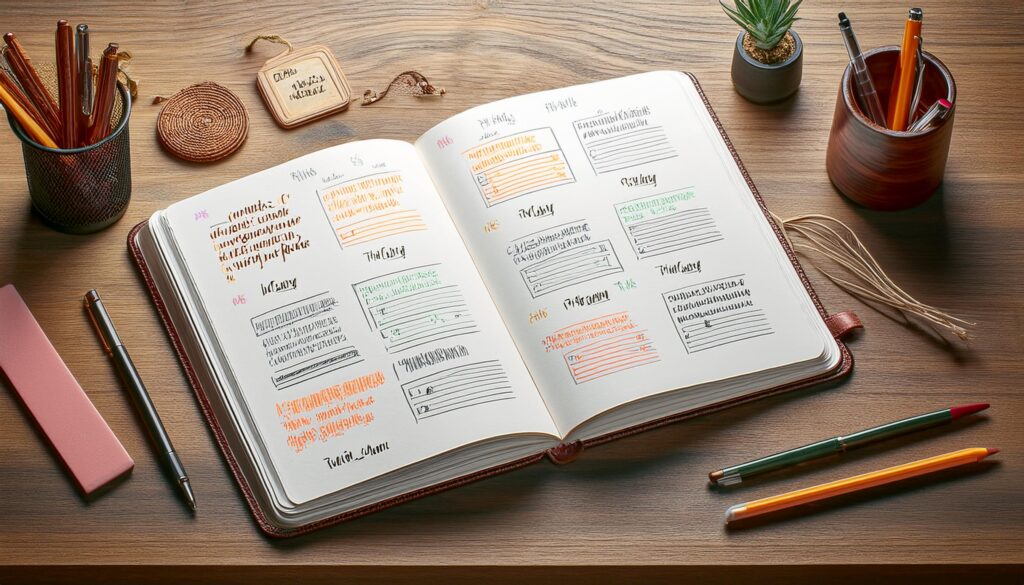
Bullet journaling is more than just a trend; it’s a powerful tool that has transformed the way professionals approach their daily tasks and long-term goals. At its core, a bullet journal is a customizable organizational system that allows you to track the past, organize the present, and plan for the future. Unlike traditional planners, bullet journals are flexible and can be tailored to fit your unique lifestyle and needs.
For busy professionals, bullet journaling offers a way to declutter the mind and organize thoughts in a systematic manner. By using bullet points, symbols, and short sentences, you can quickly jot down tasks, events, and notes. This method not only saves time but also helps in prioritizing tasks, thereby increasing productivity.
One of the key features of bullet journaling is its adaptability. You can choose to keep it simple with basic lists or get creative with intricate designs and layouts. This flexibility makes it an ideal solution for professionals who need a system that can evolve with their changing schedules and priorities.
Incorporating a bullet journal into your routine can also enhance your focus and mindfulness. By setting aside a few minutes each day to update your journal, you’re actively engaging with your goals and priorities. This daily ritual can lead to increased clarity and a sense of achievement as you track your progress over time.
Moreover, bullet journaling can be a stress-relieving practice. The act of writing down your tasks and thoughts can help alleviate the overwhelm that often accompanies a busy professional life. It’s a space where you can unload your mental clutter and gain a clearer perspective on what needs to be done.
In summary, Bullet Journaling for Busy Professionals: A Modern Guide is not just about maintaining a planner; it’s about creating a personalized system that works for you. It’s about finding a balance between productivity and creativity, efficiency and mindfulness. Whether you’re a seasoned bullet journal enthusiast or just starting out, this guide is designed to help you unlock the full potential of this versatile tool.
The Origins and Evolution of Bullet Journaling

The concept of bullet journaling was created by Ryder Carroll, a digital product designer from Brooklyn, New York. Carroll developed this system as a way to manage his own time and tasks more efficiently. Initially, it was a personal productivity method, but it quickly gained popularity due to its simplicity and effectiveness.
Bullet journaling takes its name from the use of bullet points, which are used to organize and categorize tasks, events, and notes. The original system, as outlined by Carroll, includes four main components: the index, future log, monthly log, and daily log. Each component serves a specific purpose and can be customized to fit the user’s needs.
Over the years, bullet journaling has evolved from a basic organizational system to a creative outlet for many. While some prefer to keep their journals minimalistic, others have turned them into artistic masterpieces, incorporating doodles, hand lettering, and color coding. This evolution has made bullet journaling appealing to a wider audience, as it combines functionality with personal expression.
The rise of social media platforms like Instagram and Pinterest has further fueled the popularity of bullet journaling. Users from around the world share their layouts, tips, and ideas, creating a vibrant community that inspires and motivates others to start their own bullet journal journey.
Despite its evolution, the core principles of bullet journaling remain the same: simplicity, flexibility, and mindfulness. It’s a system that encourages users to focus on what truly matters and to be intentional with their time and energy. By understanding the origins and evolution of bullet journaling, busy professionals can appreciate its value and incorporate it into their daily routine in a way that enhances productivity and personal growth.
Benefits of Bullet Journaling for Professionals
Bullet journaling offers a myriad of benefits for busy professionals looking to enhance their productivity and time management skills. One of the most significant advantages is the ability to customize the system to fit individual needs and preferences. This flexibility allows professionals to create a journal that works for them, rather than being confined to a pre-structured planner.
Another benefit is the enhanced organization that comes with bullet journaling. By breaking down tasks into manageable bullet points and categorizing them with symbols, professionals can quickly assess their priorities and focus on what needs to be done. This method reduces the feeling of overwhelm and helps in maintaining a clear overview of tasks and deadlines.
Bullet journaling also promotes mindfulness and intentionality. By dedicating time each day to plan and reflect, professionals can gain a deeper understanding of their goals and priorities. This practice encourages mindful decision-making and helps in aligning daily actions with long-term objectives.
Moreover, bullet journaling can improve focus and concentration. The act of writing down tasks and notes by hand engages the brain in a way that digital devices do not. This process can enhance memory retention and lead to a greater sense of clarity and focus.
Additionally, bullet journaling serves as a creative outlet for many professionals. The freedom to design and personalize layouts can be a stress-relieving activity that provides a break from the rigidity of daily work life. This creative expression can lead to increased motivation and a sense of accomplishment.
Finally, bullet journaling fosters personal growth and development. By tracking progress and reflecting on achievements, professionals can identify areas for improvement and set meaningful goals. This ongoing process of self-evaluation and growth is a powerful tool for achieving success in both personal and professional life.
Setting Up Your Bullet Journal: Essential Tools and Techniques
Starting a bullet journal can be an exciting yet overwhelming experience, especially for busy professionals who are new to the concept. The good news is that setting up a bullet journal doesn’t require fancy tools or artistic skills. All you need is a notebook, a pen, and a willingness to experiment and adapt the system to your needs.
When choosing a notebook, consider factors such as size, paper quality, and binding. Some professionals prefer compact notebooks that can easily fit into a bag or briefcase, while others opt for larger formats that provide more space for detailed layouts. The paper quality is also important, as it affects how well the ink from your pen will hold up without bleeding through.
As for pens, there are countless options available, ranging from basic ballpoint pens to more specialized markers and fineliners. If you enjoy adding color and creativity to your journal, consider investing in a set of colored pens or markers. However, if you prefer a minimalist approach, a simple black pen will suffice.
Once you have your tools ready, it’s time to set up your bullet journal. Start with the basics: an index, a future log, a monthly log, and a daily log. The index serves as a table of contents for your journal, allowing you to quickly locate specific sections or entries. The future log is used to record upcoming events and tasks, while the monthly and daily logs help you organize your schedule and to-do lists.
As you continue to use your bullet journal, you may find it helpful to incorporate additional elements such as habit trackers, goal-setting pages, or project planning sections. These can add depth and functionality to your journal, further enhancing its value as a productivity tool.
Remember, there’s no right or wrong way to set up a bullet journal. The key is to experiment and find what works best for you. By tailoring the system to your needs and preferences, you can create a personalized tool that supports your professional and personal growth.
Creative Layout Ideas for Busy Professionals

While the core components of bullet journaling are simple, the possibilities for customization and creativity are endless. For busy professionals, incorporating creative layouts into your bullet journal can make the process of planning and organizing more enjoyable and effective.
One popular layout idea is the weekly spread, which provides an overview of your tasks and appointments for the week. This layout allows you to see your schedule at a glance and helps in prioritizing tasks. You can choose to keep it simple with basic lists or add visual elements such as doodles, stickers, or washi tape to make it more engaging.
Another creative layout is the habit tracker, which is a great tool for monitoring and building positive habits. By creating a grid or chart, you can track daily activities such as exercise, meditation, or reading. This layout not only helps in holding yourself accountable but also provides a visual representation of your progress over time.
For professionals who manage multiple projects, a project planning layout can be invaluable. This layout allows you to break down projects into smaller tasks, set deadlines, and track progress. By having a dedicated space for each project, you can stay organized and focused on achieving your goals.
Mind maps are another creative layout idea that can help in brainstorming and organizing ideas. By visually mapping out your thoughts and concepts, you can gain clarity and develop a more comprehensive understanding of complex topics. This layout is especially useful for professionals who need to generate and organize ideas quickly.
Incorporating creative layouts into your bullet journal can also serve as a form of self-expression and relaxation. The act of designing and decorating your journal can be a therapeutic activity that provides a break from the demands of professional life.
Ultimately, the key to creating effective layouts is to find a balance between functionality and creativity. By experimenting with different designs and formats, you can create a bullet journal that not only enhances your productivity but also brings joy and satisfaction to your daily routine.
Incorporating Bullet Journaling into Your Daily Routine
For busy professionals, finding the time to maintain a bullet journal can be a challenge. However, incorporating bullet journaling into your daily routine doesn’t have to be a daunting task. With a few simple strategies, you can make it a seamless and rewarding part of your day.
One of the most effective ways to incorporate bullet journaling into your routine is to set aside a specific time each day for journaling. Whether it’s in the morning with your cup of coffee or in the evening before bed, dedicating time to plan and reflect can help in establishing a consistent habit.
Another strategy is to keep your bullet journal accessible. By having it readily available on your desk or in your bag, you can quickly jot down tasks, notes, or ideas as they come to you. This practice not only saves time but also ensures that nothing important slips through the cracks.
Incorporating bullet journaling into your routine also involves being intentional with your entries. Rather than filling your journal with unnecessary details, focus on capturing the most important tasks and events. This approach helps in maintaining a clear and concise overview of your schedule and priorities.
Additionally, consider using your bullet journal as a tool for reflection and self-assessment. At the end of each day or week, take a few minutes to review your entries and assess your progress. This practice can provide valuable insights into your habits and productivity, allowing you to make adjustments and set new goals.
Finally, don’t be afraid to adapt your bullet journaling routine as needed. Life as a busy professional is unpredictable, and your journaling practice should be flexible enough to accommodate changes in your schedule and priorities. By being open to experimentation and adaptation, you can create a routine that truly supports your needs and goals.
Overcoming Common Challenges with Bullet Journaling
While bullet journaling offers numerous benefits for busy professionals, it’s not without its challenges. Understanding and addressing these common obstacles can help you maintain a consistent and effective bullet journaling practice.
One of the most common challenges is finding the time to maintain a bullet journal amidst a busy schedule. To overcome this, start by setting realistic expectations for your journaling practice. Remember, bullet journaling doesn’t have to be a time-consuming activity. Even spending just a few minutes each day can make a significant difference in your productivity and organization.
Another challenge is the pressure to create aesthetically pleasing layouts. While social media showcases beautifully designed bullet journals, it’s important to remember that the primary purpose of a bullet journal is functionality, not perfection. Focus on creating layouts that work for you, and don’t be afraid to keep it simple.
For some professionals, staying consistent with bullet journaling can be difficult. To address this, try incorporating journaling into your existing routines. For example, you can pair it with your morning coffee ritual or use it as a way to unwind at the end of the day. By integrating it into your daily habits, you’re more likely to stick with it.
Additionally, it’s common to feel overwhelmed by the abundance of bullet journaling techniques and ideas available. To avoid this, start with the basics and gradually incorporate new elements as you become more comfortable with the system. Remember, bullet journaling is a personal practice, and there’s no one-size-fits-all approach.
Finally, if you find yourself falling behind or losing motivation, take a step back and reassess your goals and priorities. Sometimes, a break or a fresh perspective is all it takes to reignite your passion for bullet journaling. By being patient and forgiving with yourself, you can overcome challenges and create a journaling practice that enhances your professional and personal life.
Frequently Asked Questions
What is bullet journaling, and how does it work for busy professionals?
Bullet journaling is a customizable organizational system that uses bullet points and symbols to track tasks, events, and notes. For busy professionals, it offers a flexible and efficient way to manage time and tasks, enhancing productivity and focus.
What are the essential tools needed to start bullet journaling?
The essential tools for bullet journaling are a notebook and a pen. While you can use any notebook, many prefer one with dotted or grid paper for flexibility in layouts. Pens can range from basic ballpoint to colored markers, depending on your preference for creativity.
How can I maintain consistency in my bullet journaling practice?
To maintain consistency, set aside a specific time each day for journaling, such as in the morning or evening. Keep your journal accessible and focus on capturing the most important tasks and events. Integrating journaling into your daily routine can help establish a consistent habit.
Is bullet journaling suitable for professionals with limited time?
Yes, bullet journaling is suitable for professionals with limited time because it’s highly customizable. You can spend as little or as much time as you like, focusing on key tasks and priorities. The system’s flexibility allows you to adapt it to fit your schedule and needs.
How can bullet journaling enhance productivity and time management?
Bullet journaling enhances productivity and time management by providing a clear and organized overview of tasks and priorities. The system encourages mindfulness and intentionality, helping professionals focus on what truly matters and align daily actions with long-term goals.
Conclusion
Bullet Journaling for Busy Professionals: A Modern Guide is more than just a method of organization; it’s a transformative tool that empowers individuals to take control of their time and productivity. By understanding the principles and benefits of bullet journaling, professionals can create a personalized system that supports their unique needs and goals. Whether you’re seeking to improve focus, achieve work-life balance, or foster personal growth, bullet journaling offers a versatile and effective solution. As you embark on this journey, remember that the key to success lies in experimentation, adaptation, and a commitment to making the system work for you. With patience and creativity, bullet journaling can become an invaluable part of your professional and personal life, helping you achieve effortless excellence every day.